Nexus Darknet Market Intelligence Hub
Nexus Darknet is one of the most active decentralized peer-to-peer marketplaces operating on the Tor network. This resource provides open-source, informational intelligence — market structure, security practices, verified link directories, and payment guidance — for research and educational purposes only.
What Is Nexus Website
The Nexus Darknet marketplace launched as a successor to earlier darknet ecosystems, designed with a focus on resilient infrastructure, escrow protection, and user anonymity. Unlike centralized platforms, its architecture distributes operational risk across multiple Tor hidden services.
The platform is built on a vendor-buyer model with an integrated dispute system, multi-signature escrow, and independent PGP verification. Accessing the Nexus Website requires the Tor Browser and one of the three verified .onion addresses published on this site. No clearnet access is available by design.
Market categories span physical and digital goods, with an independent vendor rating system that tracks completion rate, response time, and dispute outcomes. All vendor pages display public PGP keys for out-of-band encrypted communication — a mandatory security layer for order processing.
This resource aggregates open-source intelligence about the platform's structure, payment systems, and security posture. No transactions are facilitated here. All information is provided strictly for educational and research purposes.
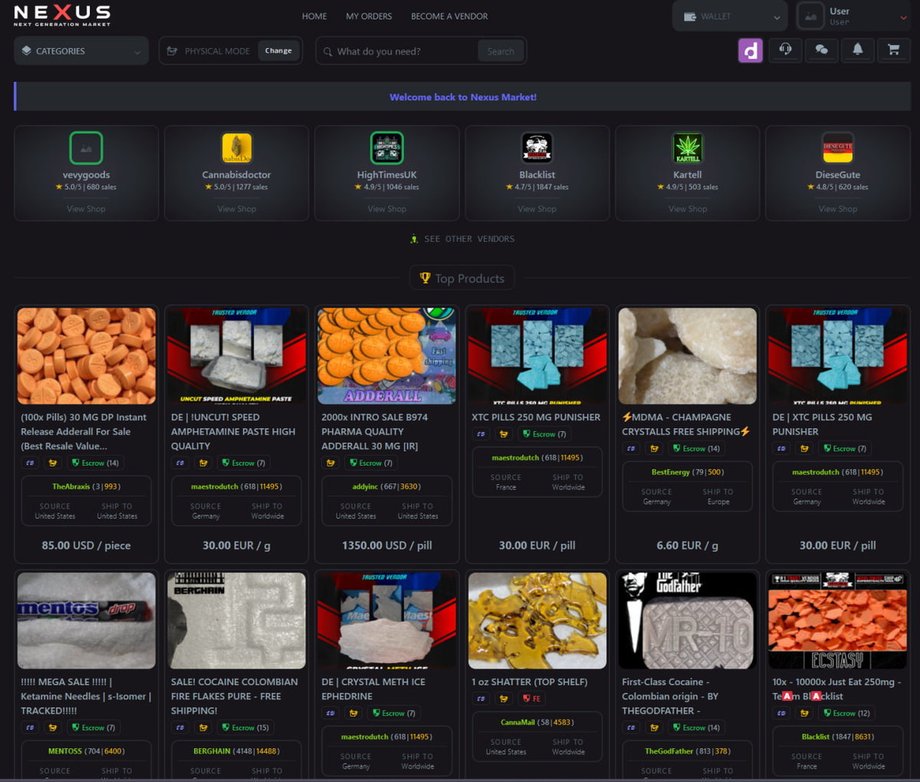
> Interface preview — informational only
Core Market Features

Escrow Protection
Multi-signature escrow holds all funds until both parties confirm transaction completion. Buyers retain the ability to open disputes within a defined window, protecting against exit scams and non-delivery.

PGP Encryption
All vendor communications require PGP-encrypted messages. Public keys are verified on-platform. Shipping addresses and sensitive information are never transmitted in plaintext at any point in the process.

Monero Payments
XMR (Monero) is the primary accepted currency, with BTC and LTC also supported. Monero's ring signatures and stealth addresses provide a privacy layer that Bitcoin cannot match for darknet transactions.

Mirror Redundancy
Three independently hosted .onion mirror addresses ensure continuous uptime even when primary addresses experience DDoS pressure or temporary downtime. The Nexus Link directory on this site is updated in real time.

Vendor Ratings
A transparent rating system scores each vendor on delivery success rate, response time, and dispute outcomes. New vendors operate under increased scrutiny until a minimum transaction threshold is reached and verified.

2FA & Login Guard
Account access requires two-factor authentication via PGP challenge-response. Login guard alerts users of new device connections. PIN-based withdrawal locks prevent unauthorized fund movements from compromised sessions.
Accepted Cryptocurrencies
Darknet markets depend on pseudonymous payment rails that minimize traceability. Since Bitcoin's 2009 launch, the ecosystem has evolved from purely BTC-denominated transactions toward privacy-native coins. On-chain analytics tools have significantly reduced Bitcoin's practical anonymity for high-risk transactions.
Nexus Darknet accepts three cryptocurrencies: Monero (XMR), Bitcoin (BTC), and Litecoin (LTC). Each carries distinct privacy trade-offs that informed users should understand before choosing a payment method.
Ring signatures, stealth addresses, and RingCT make every XMR transaction unlinkable and untraceable by default. No optional privacy — every transaction is private. The most secure payment option on the platform.
→ Full XMR GuideBitcoin transactions are pseudonymous but permanently public on the blockchain. Effective use requires additional privacy layers — CoinJoin, dedicated wallets, and chain-analysis avoidance techniques are essential.
→ Full BTC GuideLitecoin offers faster confirmation times than Bitcoin and lower fees, but shares similar transparency characteristics. MWEB (MimbleWimble Extension Blocks) provides optional transaction confidentiality when properly utilized.
→ Full LTC GuideLatest Market Intelligence
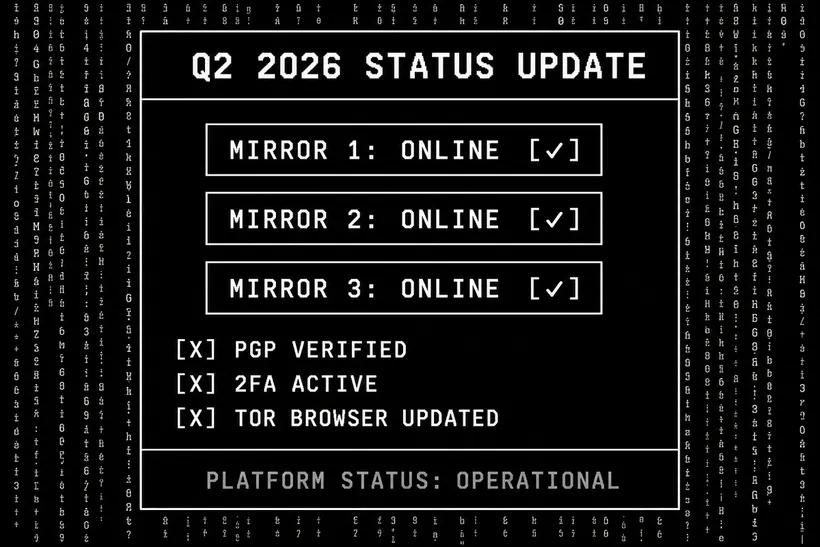
Nexus Spring 2026 Platform Updates
New dispute resolution workflow, improved vendor dashboard, and enhanced PGP verification integration rolled out across all mirrors.
Read Full Report →
Darknet Security Analysis: Q1 2026
A review of threat actors targeting marketplace users in Q1 2026, including phishing infrastructure, fake mirrors, and social engineering tactics.
Read Full Report →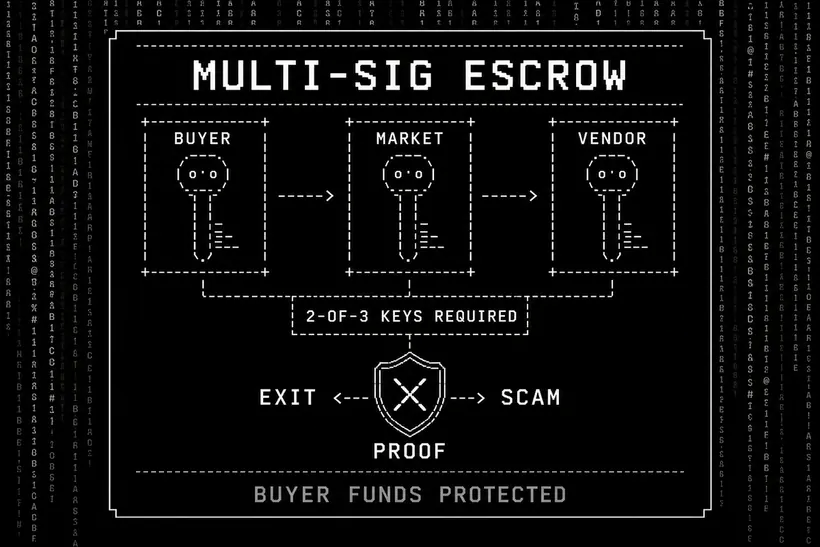
Monero Network Upgrade: What Changes
The latest Monero protocol update strengthens ring signature ring sizes and refines the Dandelion++ transaction propagation, improving baseline privacy for all users.
Read Full Report →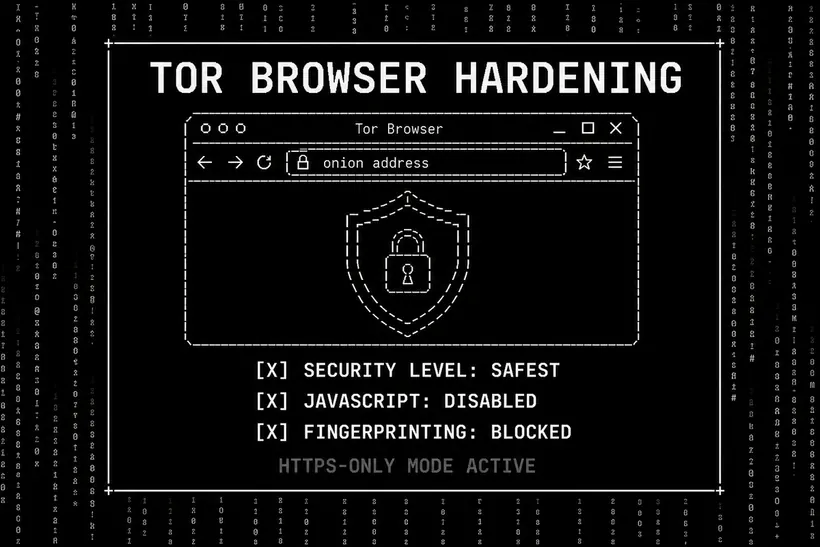
Tor Browser Security Hardening 2026
Step-by-step configuration guide to maximize Tor Browser security, including security slider settings, JavaScript policy, and OS-level isolation recommendations.
Read Full Report →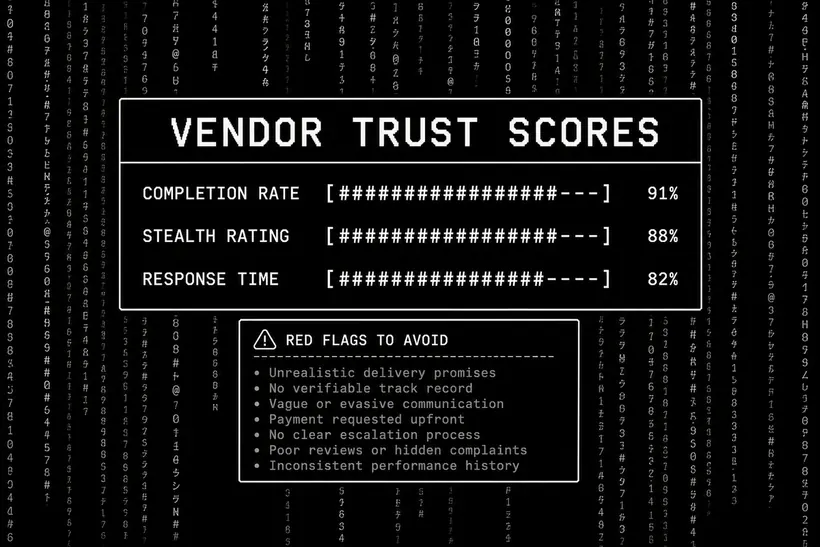
How Vendor Trust Scores Work
An in-depth look at how marketplace platforms calculate and display vendor reliability metrics, dispute ratios, and stealth packaging success rates.
Read Full Report →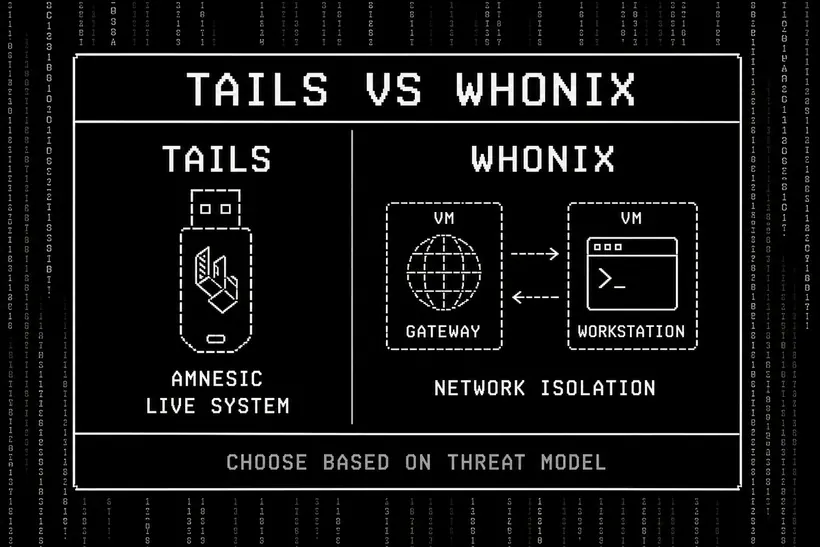
Tails OS vs. Whonix: Which Is Safer?
Comparing the two leading privacy operating systems for anonymous browsing — architecture differences, threat models, and practical use cases for each.
Read Full Report →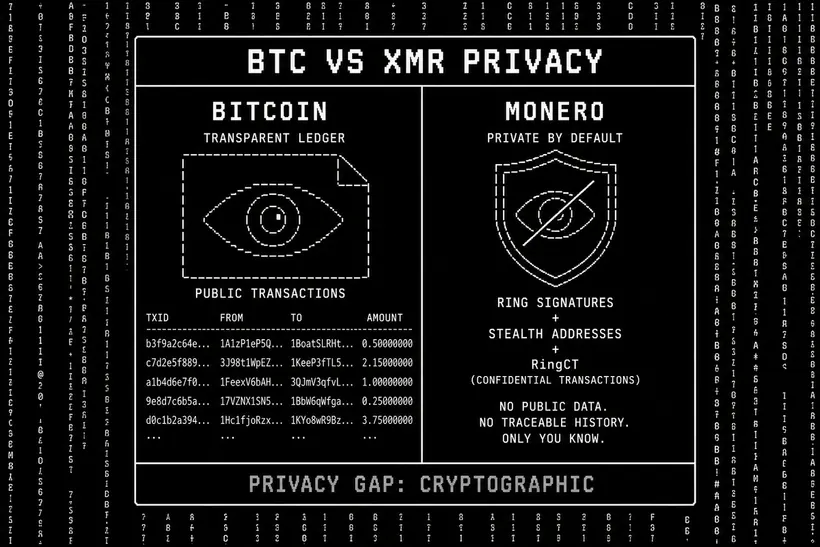
BTC vs XMR: Transaction Privacy Compared
A technical comparison of Bitcoin's pseudonymous and Monero's cryptographically private transaction models, and their implications for market users.
Read Full Report →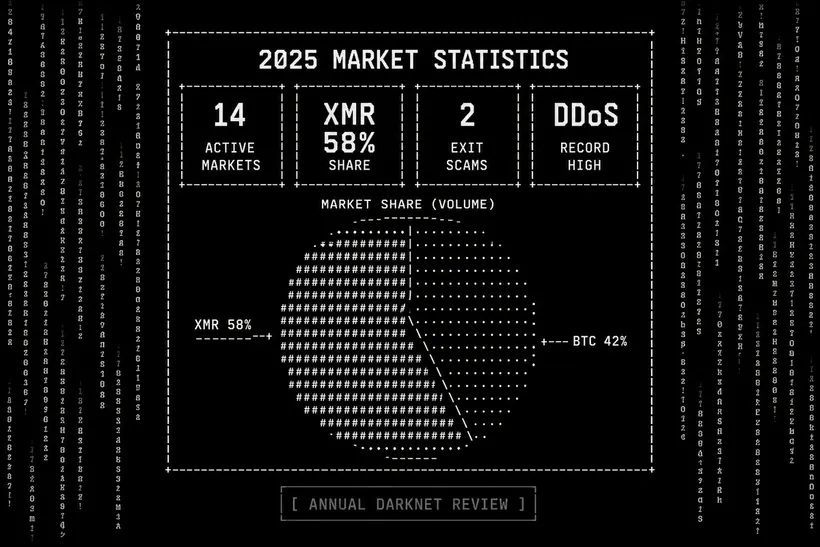
Year-End Market Statistics: 2025 Review
Aggregated open-source data on darknet market activity in 2025 — transaction volumes, vendor counts, DDoS events, and exit scam frequency analysis.
Read Full Report →Harm Reduction Principles
Harm reduction is a public health approach that acknowledges substance use as a reality and prioritizes minimizing associated risks over abstinence-only frameworks. The following principles apply regardless of substance type or administration method.
- Start low, go slow. Unknown purity and potency require conservative initial dosing. No two batches of the same substance are identical.
- Never use alone. Have a trusted person present or use a remote check-in service. Overdose risk is highest when users are isolated.
- Test your substances. Reagent test kits, fentanyl test strips, and laboratory drug checking services identify adulterants that cause most overdose deaths.
- Know your route. Bioavailability, onset, and duration vary significantly across administration methods. Intravenous carries the highest risk profile.
- Carry naloxone. Naloxone (Narcan) rapidly reverses opioid overdose. It is widely available without prescription and saves lives with minimal training.
- Avoid mixing. Combining CNS depressants — opioids, benzodiazepines, alcohol — multiplies respiratory depression risk in a non-linear way.
Seek emergency medical care immediately if you observe:
- Unresponsive or unconscious person
- Slow, shallow, or stopped breathing
- Blue or grey lips and fingertips (cyanosis)
- Pinpoint pupils with opioid administration
- Seizure activity or uncontrolled muscle movement
- Rapid or irregular heartbeat with stimulant use
- Extreme chest pain or head pain
Operational Security Overview
Operational security (OPSEC) determines whether your activity on the Tor network remains anonymous or becomes traceable. The majority of darknet-related law enforcement actions succeed not through cryptographic breaks but through OPSEC failures — metadata leaks, reused identifiers, and behavioral patterns that connect online activity to real-world identity.
Why OPSEC Matters
Your IP address, device fingerprint, and behavioral metadata can identify you independently of any cryptographic protections. OPSEC is the practice of understanding and eliminating those information leaks before they occur.
Essential Tools
Tor Browser (minimum), Tails OS or Whonix (recommended), PGP for all communications, XMR for payments, and a dedicated device or VM with no personal accounts or identifiers connected.
Red Flags to Avoid
Logging into personal accounts over Tor, reusing usernames or PGP keys across platforms, using a home Wi-Fi connection without additional isolation, and discussing activities on clearnet platforms.
Threat Model First
Define who you are protecting against before choosing tools. ISP-level surveillance, platform-level compromise, and law enforcement capabilities each require different defensive layers and cannot be addressed by a single tool.
How Not to Get Phished
Phishing is the primary attack vector against darknet marketplace users. Fake mirrors replicate the visual appearance of legitimate platforms, capturing credentials and cryptocurrency deposit addresses before users notice the difference.
- Always access the market via links published on verified indexing sites or resources like this one — never via search engine results or forum posts from unverified accounts.
- Verify the .onion address character-by-character before entering credentials. V3 onion addresses are 56 characters long — a single character difference creates a completely different destination.
- Check PGP signatures on market announcements. The Nexus admin PGP key is published in the verified links section of this site.
- Disable JavaScript in Tor Browser (Security Level: Safest). Phishing sites frequently use JavaScript-based credential harvesters that require JS execution.
- Never enter your credentials on a site that loads faster than expected over Tor — speed anomalies can indicate a clearnet-proxied fake mirror.
Verified Nexus Access — Use only the three onion addresses published in the links section of this site. All are PGP-signed and cross-referenced against multiple independent darknet monitors.
Never trust Google. Search engines index phishing clones. The only safe source for Nexus Access links is a trusted directory resource with PGP verification.
Frequently Asked Questions
The Nexus Darknet marketplace is a peer-to-peer platform operating on the Tor network. It uses a vendor-buyer escrow model with PGP-enforced communications and Monero as its primary payment currency. This site provides informational content about its structure — no transactions are facilitated here.
Accessing the Nexus Website requires the Tor Browser, available from the official Tor Project website. Use only verified .onion addresses from trusted sources. Set your security level to Safest before visiting any hidden service. Consider using Tails OS or Whonix for enhanced isolation from your host operating system.
The verified Nexus Link addresses are published on this site with PGP signatures for cross-verification. Three mirrors are maintained and updated when addresses change. Always verify the 56-character V3 onion address character-by-character and cross-reference with the PGP-signed announcement before use.
Monero's protocol-level privacy features — ring signatures, stealth addresses, and RingCT — make transactions unlinkable and untraceable by default. Bitcoin's blockchain is fully transparent and permanently public. Chain analysis firms routinely trace Bitcoin flows, making XMR a meaningfully more private option for Nexus Access and market interactions.
No. This is an independent informational resource. All content is based on open-source intelligence and is published for educational purposes only. We have no operational, financial, or administrative relationship with the marketplace. No transactions are processed through this site.
The essential stack for anonymous darknet research includes: Tor Browser or the Tor network (mandatory), Tails OS or Whonix (strongly recommended), GnuPG for PGP encryption, Monero wallet software, and a dedicated device with no personal identifiers. See the full OPSEC guide for configuration details and threat-model-specific recommendations.