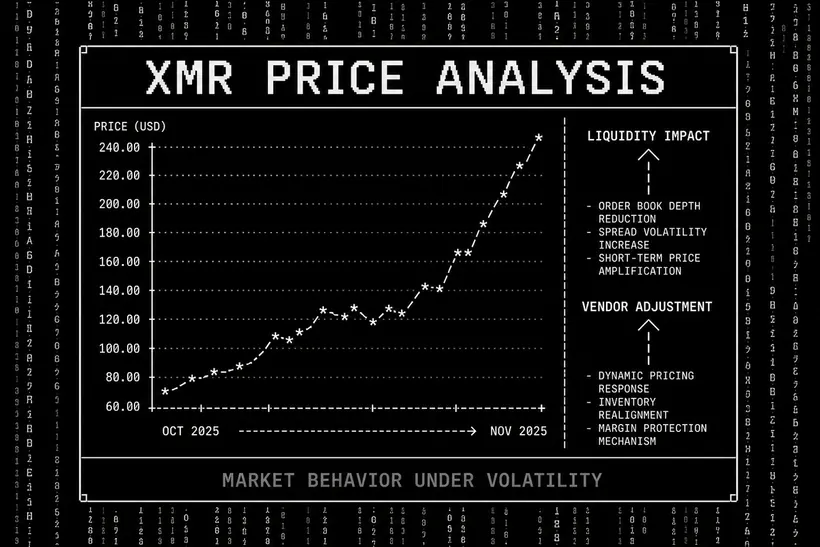
Monero experienced significant price appreciation in late November 2025, driven by increased institutional interest in privacy assets and accelerating regulatory pressure on transparent cryptocurrencies in multiple jurisdictions. This price movement had observable downstream effects on darknet market behavior that are worth analyzing for users managing ongoing market participation.
Liquidity Effects
XMR price surges create temporary friction in the deposit-to-purchase cycle. Users who had pre-funded market accounts with fixed XMR amounts found their purchasing power had increased relative to fiat-priced goods. Conversely, users who needed to acquire XMR for a specific purchase faced a higher fiat cost for the required XMR amount during the surge period.
Platform-level effects included increased withdrawal activity as users sought to capture appreciation on held balances, and a temporary decrease in new deposits as some buyers waited for price stabilization before committing funds. This pattern is consistent with historical XMR price movement observations across multiple market cycles.
Vendor Pricing Adjustments
Vendors who price in XMR terms face exposure to currency appreciation when XMR prices rise faster than their input costs. Community forum discussions indicated a split approach: some vendors temporarily increased XMR prices to maintain fiat purchasing power equivalence, while others held prices steady, effectively offering a temporary discount in fiat terms as a buyer retention strategy.
Vendors who denominate prices in fiat equivalents with automatic XMR conversion fare better during price swings but introduce exchange rate risk into the buyer's deposit calculation. The platform's XMR fee preference creates indirect pressure toward XMR-native pricing.
Acquiring XMR During a Price Surge
During price surges, P2P non-KYC XMR sources like Haveno DEX may experience increased spread between ask and bid prices as liquidity providers adjust for volatility. Patience and smaller transaction sizes typically achieve better execution than attempting to purchase large amounts at speed during active price movements. Atomic swap services provide alternative liquidity that is less sensitive to P2P order book imbalances.