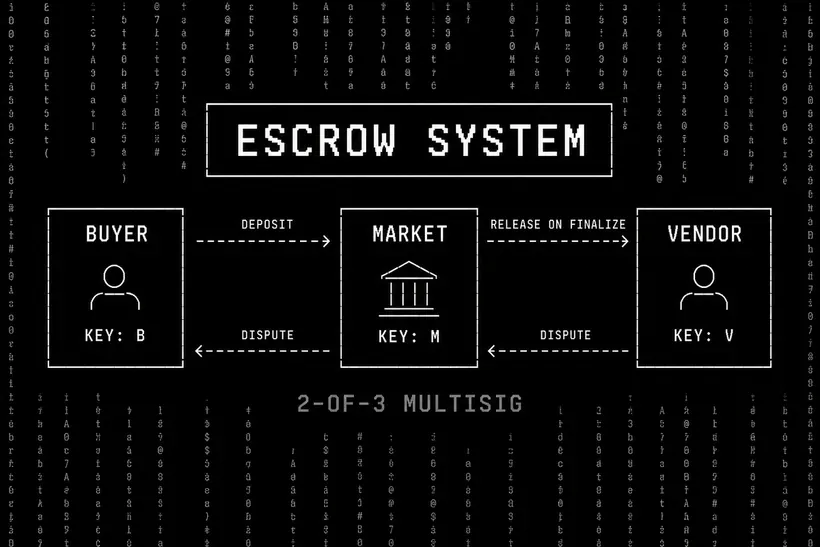
Escrow is the mechanism that makes darknet marketplace transactions possible without a foundation of pre-existing trust between strangers. Understanding how escrow systems work — and the significant differences between escrow models — is essential for evaluating any marketplace's safety profile before use.
How Standard Escrow Works
In a standard single-signature escrow model, the buyer sends cryptocurrency to an address controlled by the platform. The platform holds the funds until the buyer confirms receipt (or the finalization window expires). On confirmation, the platform releases funds to the vendor's balance minus the platform fee. The platform is the sole custodian of the escrowed funds — it can release them unilaterally to either party.
This model's weakness is platform trust: an exit scam by administrators can result in all escrowed funds across all active orders being stolen simultaneously. This is precisely what has occurred in multiple high-profile darknet market exit scams, causing cumulative losses in the tens of millions of dollars.
Multi-Signature Escrow
Multi-signature (multisig) escrow addresses this platform trust problem by distributing the cryptographic authority to release funds across multiple parties. In a 2-of-3 multisig setup, three parties each hold a key: the buyer, the vendor, and the platform. Releasing funds requires any two of the three to sign — the platform alone cannot release funds to anyone. An exit scam would require the platform to compromise individual vendor and buyer keys simultaneously, which is computationally and operationally infeasible at scale.
Finalization Windows
The finalization window is the time period during which a buyer can open a dispute after marking an order as received. A typical window is 3-7 days. If no dispute is opened within this window, funds finalize automatically to the vendor. Buyers should never finalize an order before physically inspecting the contents — early finalization surrenders all dispute rights regardless of order condition.
When to Dispute
Open a dispute if: the order has not arrived within the estimated delivery window plus a reasonable buffer; the contents are significantly different from what was described; or the vendor has become unresponsive after order placement. Collect evidence before disputing: order timestamps, vendor communications, and delivery tracking data where applicable. The dispute process requires evidence submission — well-documented disputes resolve more favorably.